
The questions brands and research teams are asking right now sound like this:
Is AI good enough to replace qualitative research? Do focus groups still work? Is in-person research worth the investment when budgets are tight? What does the future of consumer insight actually look like?
These are fair questions. The market is uncertain. Technology is moving fast. And everyone is being asked to do more with less.
After 25 years of building the rooms where real insight happens, here is our answer.
The room is not going anywhere. And the brands that understand why are the ones that will come out of this moment with a clearer picture of their consumer than everyone else.
The Promise of Faster Has a Cost Nobody Talks About
The pitch for AI in research is genuinely compelling. Pattern recognition at scale. Synthesis in seconds. Cost reduction that looks good in a budget meeting. If you are not using it somewhere in your workflow you are leaving efficiency on the table and we would be the first to say so.
The 2025 GRIT Insights Practice Report confirms it — generative AI has moved beyond experimentation and is now embedded in core research workflows industry-wide.
But efficiency is not insight. Speed is not understanding.
The same industry data shows data quality concerns have surged year over year — even as AI adoption accelerates.
The thing that actually changes what a brand does next has never come from a dashboard. It comes from a room.
It comes from the participant who answers the question with a smile but whose posture closes. The glance two strangers share before one of them says the thing nobody expected. The energy shift when a concept lands differently than the moderator planned for.
These are not soft signals. They are the data that rewrites the brief. And they only exist when people are physically in the same space.
AI cannot be in the room. We are. And that difference is everything.
25 Years of the Same Belief
Open House Lofts opened its first space in New York City in 2001 with a premise that felt radical at the time and feels more urgent today than ever: the environment is a research variable, not a backdrop.
The facilities that existed then were built for compliance. Sterile rooms. Fluorescent lighting. One-way mirrors that told every participant the moment they walked in that they were there to be studied. All of it working against the honest, open conversation that actually produces useful insight.
We built something different because we believed the room itself was doing damage to the research before the moderator said a single word.
A quarter century later that founding belief drives everything we do across three cities. New York. Los Angeles. Chicago. Same standard. Same conviction. The environment shapes the exchange. Better spaces produce better conversations. Better conversations produce better insights.
That has not changed once in 25 years.
“I have watched more innovation cycles move through this industry than I can count. Methodologies rise and fall. Technology promises to replace the human element over and over again. And here is what has stayed true across every single one of those cycles: the quality of the insight depends on the quality of the conversation. The quality of the conversation depends on the quality of the room and the quality of the people in it. That is a full circle we keep coming back to no matter how far the technology takes us.”
Teddy Liouliakis, Co-Founder, Why-Q Inc. and Open House Lofts
What the Room Gives You That No Tool Can Replicate
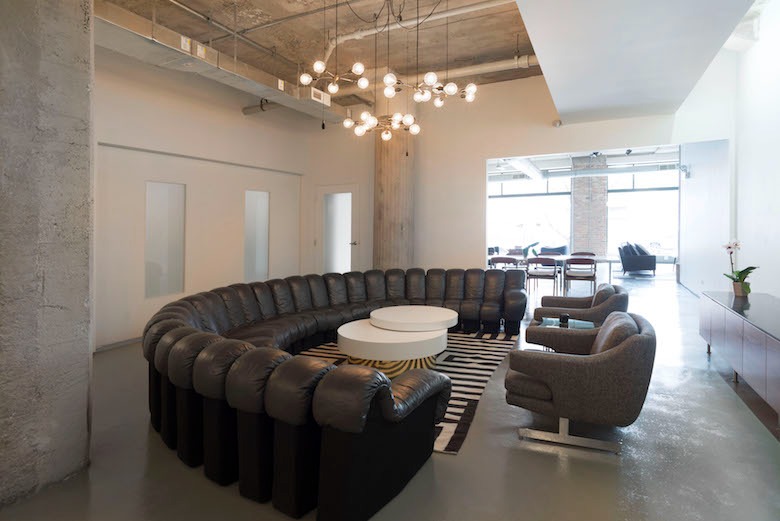
Open House Lofts — Chicago, West Loop
In-person, in-facility qualitative research is not a legacy methodology being kept alive by people resistant to change. It is the standard that everything else is measured against. Here is what you actually get when you commit to doing it right.
Body language and nonverbal data. The signals that do not survive a screen. Posture, micro-expression, the shift in energy when something does not land the way you expected. These are real data points that change strategy and they only exist in a room.
Spontaneous participant exchange. When people share a physical space they respond to each other, not just to the moderator. That group dynamic surfaces insight that no remote interview, no AI synthesis tool, and no survey can produce.
The unplanned moment. The thing someone says after they think the session is wrapping up. The tangent that becomes the whole story. The off-script exchange that rewrites the brief. It only happens when people are present with each other.
Recruiting that actually holds up. Quality respondents in a quality environment is still the formula. It has always been the formula. No amount of technological sophistication fixes what happens when the wrong people are in the room. We have handled recruiting in-house for 25 years through real relationships because we believe it is too important to outsource.
A space that does work before the moderator does. The room sends a message the moment someone walks in. Warm, considered, intentional spaces tell participants they are here to have a conversation. Sterile, institutional spaces tell them they are here to be studied. Those two experiences do not produce the same output.
Both Sides of the Table
The debate about AI versus human insight is usually framed as a choice between old and new, between tradition and progress. That framing is wrong and it is leading a lot of teams to make decisions they will regret.
The brands doing the best qualitative research right now are not choosing between technology and in-person work. They are using both intentionally, each one where it actually belongs.
AI belongs in the parts of the workflow where speed and pattern recognition are the job. Synthesis. Transcription. Identifying themes across large volumes of data. It is genuinely useful there.
In-person research belongs where those tools stop working. The unscripted moment. The participant who says one thing and means something else entirely. The group dynamic that only emerges when people share a room and start feeding off each other’s energy. The insight that was never going to show up in a prompt because the person who had it did not know they had it until the conversation pulled it out of them.
That is not something you automate. That is something you build a room for.
Why This Matters Even More When Times Are Uncertain
When budgets tighten, research is often the first thing to get cheaper. Shorter timelines. Remote over in-person. Synthetic respondents over real respondents. AI summaries over moderated sessions.
Industry data confirms the squeeze — only 34% of research buyers now cite management support for budget increases, down from 65% the year prior.
Here is the problem with that logic: the cost of a bad decision is always higher than the cost of pulling the right people into a room that fosters conversation and creativity.
The brands that protect their investment in real conversations during uncertain periods come out the other side with a clearer picture of their consumer than everyone who cuts corners. They know what their customers are actually thinking, not what a model predicted they were thinking. They make better bets. They recover faster. They build on something real.
The brands that accepted cheaper substitutes find out what they gave up later, usually when the strategy does not land and nobody can explain why.
In-person qualitative research is not a luxury for good times. It is exactly the kind of investment that pays off when the stakes are highest.
The Brands Getting This Right Are Still Showing Up
Twenty-five years of doing this has taught us one thing more clearly than anything else.
The formula has not changed. The right people. The right room. Enough space for a real conversation to happen. That combination produces insight that no shortcut has ever been able to replicate and no wave of innovation has managed to replace.
We have watched AI, mobile research, remote platforms, big data, and a dozen other technologies move through this industry. Some of them made the work better. None of them changed what happens when the right person, in the right environment, says the thing nobody expected.
That moment still happens in a room. We have been building the right environments for 25 years.
If you have a study coming up, we’d like to be part of it.
Open House Lofts. NYC. LA. Chicago